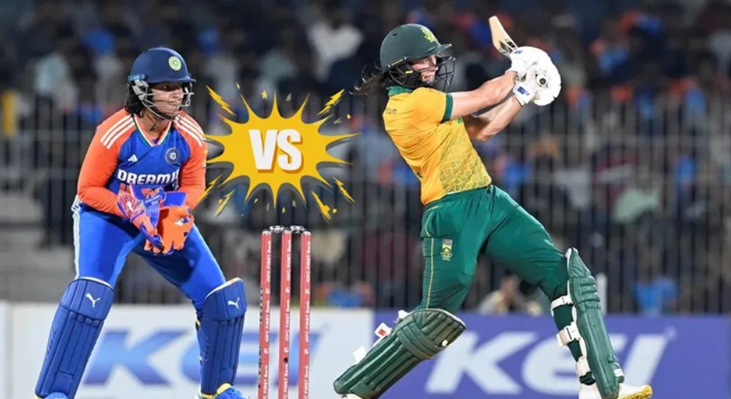
The rivalry between the two sides has grown into one of the most competitive matchups in modern women’s cricket. What began as cautious early encounters has transformed into high-intensity battles filled with pressure, tactical adjustments, and standout individual performances. Over the years, both teams have evolved significantly in batting depth, bowling variety, and fielding standards, making each meeting unpredictable. Fans have witnessed shifting momentum, dramatic finishes, and moments that define careers. Every match adds a new layer to the story, turning this rivalry into more than just a contest, but a reflection of growth, resilience, and rising standards in international women’s cricket.
Recent Matches Table
Match
Format
Venue
Winner
Margin
Score 1
Score 2
Match 1
ODI
Bengaluru
India
143 runs
IND 265/8
SA 122
Match 2
ODI
Bengaluru
India
4 runs
IND 325/3
SA 321/6
Match 3
ODI
Bengaluru
India
6 wickets
SA 215/8
IND 220/4
Match 4
Test
Chennai
India
10 wickets
IND 603/6d
SA 266 & 373
Match 5
T20I
Chennai
South Africa
12 runs
SA 189/4
IND 177/4
Match 6
T20I
Chennai
None
No result
SA 177/6
Washout
Match 7
T20I
Chennai
India
10 wickets
SA 84
IND 88/0
Team Statistics Summary Table
Team
Played
Won
Lost
No Result
Highest Score
Lowest Score
India Women
7
5
1
1
603
177
South Africa Women
7
1
5
1
373
84
Head to Head
7
5
1
1
603
84
Matches in India
7
5
1
1
603
84
Matches in Bengaluru
3
3
0
0
325
122
Matches in Chennai
4
2
1
1
603
84
Overall Series Winner
3
2
0
1
603
84
Individual Batting Records Table
Player
Team
Matches
Innings
Total Runs
Highest Score
Average
Smriti Mandhana
India
6
6
546
149
91.00
Shafali Verma
India
6
6
302
205
50.33
Laura Wolvaardt
South Africa
6
7
331
122
47.28
Harmanpreet Kaur
India
6
5
216
103
54.00
Sune Luus
South Africa
6
7
197
109
28.14
Marizanne Kapp
South Africa
5
6
168
74
28.00
Tazmin Brits
South Africa
6
6
142
81
23.66
Individual Bowling Records Table
Player
Team
Matches
Overs
Wickets
Best Bowling
Economy
Sneh Rana
India
1
25.3
8
8/77
3.01
Pooja Vastrakar
India
6
32.0
16
4/13
4.15
Deepti Sharma
India
6
114.0
13
2/47
3.42
Radha Yadav
India
5
21.0
9
3/6
4.80
Nonkululeko Mlaba
South Africa
6
67.1
6
2/22
4.60
Ayabonga Khaka
South Africa
4
34.0
4
3/47
5.20
Delmi Tucker
South Africa
2
30.2
2
2/141
5.41
Rivalry Beginnings: First Encounters on the International Stage
The opening phase of meetings between the two sides marked the beginning of a long competitive journey in women’s international cricket. Both teams were still developing their core identities, focusing more on structure, discipline, and survival rather than aggressive dominance. Batters spent time adjusting to international pace and swing, while bowlers concentrated on line and length rather than attacking variations. These early games were shaped heavily by conditions, with pitches often assisting bowlers and making scoring difficult. The contests were not about big totals or explosive finishes but about patience and control under pressure. Each match acted like a learning ground where both sides carefully observed each other’s strategies. Gradually, small competitive sparks started appearing through partnerships and breakthrough spells. Although the intensity was still developing, these early encounters laid the foundation of a rivalry that would grow stronger with every series and every new generation of players.
Match Phase
Dominant Factor
Key Feature
Game Style
Early ODIs
Bowling control
Low scoring matches
Conservative approach
First T20s
Batting caution
Risk management
Defensive play
Conditions
Pitch behavior
Slow surfaces
Tactical cricket
Team mindset
Learning stage
Experimentation
Balanced setup
Early Clashes: Building Experience and Tactical Awareness
As the number of encounters increased, both sides began to understand each other’s strengths and weaknesses more clearly. Matches became slightly more competitive, even though dominance still shifted depending on conditions and execution. One side often relied on strong opening partnerships, while the other depended on fast bowlers to create early pressure. Spinners gradually became more influential in controlling the middle overs, slowing down scoring rates and forcing mistakes. Captains started experimenting with field placements and bowling rotations, showing early signs of tactical evolution. Batters learned the importance of rotating strike and building partnerships rather than relying on individual brilliance alone. These matches may not have produced dramatic finishes, but they played a crucial role in shaping future strategies and improving consistency across both squads.
Aspect
Team Approach
Strength Area
Challenge
Batting
Partnership building
Stability focus
Scoring speed
Bowling
Pace reliance
Early wickets
Death overs control
Fielding
Structured setup
Discipline
Catch conversion
Strategy
Conservative planning
Control focus
Adaptability gap
Rise of Competitive Intensity: Matches Getting Closer
Over time, the difference in quality between the two sides started narrowing, leading to far more competitive and unpredictable matches. Games that were once straightforward turned into tense battles decided in the final overs. Batters improved their ability to accelerate under pressure, while bowlers developed better variations to counter aggressive intent. Middle-order contributions became increasingly important, often deciding whether teams could recover from early setbacks or collapse under pressure. Fielding standards also rose significantly, saving crucial runs and creating unexpected wicket opportunities. The mental side of the game became more important than ever, as momentum shifts began playing a major role in determining outcomes. These changes transformed the rivalry into a more balanced contest where execution under pressure mattered more than reputation or past records.
Phase
Key Change
Impact Area
Match Outcome
Middle overs
Spin control increase
Run rate management
Close finishes
Powerplay
Aggressive intent
Early momentum
Pressure creation
Death overs
Bowling variations
Score control
Tight results
Fielding
Athletic improvement
Run saving
Narrow margins
Defining Clashes: High Pressure Battles Under Spotlight
Certain encounters stood out as turning points that gave the rivalry its identity and emotional depth. These matches featured intense pressure situations where both sides refused to give up easily. Chasing targets often required calm execution under pressure, while defending totals demanded precision in bowling and field settings. Partnerships became match-defining moments, especially when batters held their composure during collapses. Bowlers delivered crucial breakthroughs at key stages, often shifting momentum within a few deliveries. Tactical decisions such as bowling changes and field placements played a major role in deciding outcomes. Even small errors were punished heavily, making every moment critical. These contests elevated the rivalry into a high-stakes competition where mental strength was just as important as technical skill.
Match Situation
Turning Point
Key Player Role
Result Impact
High chase
Middle collapse
Finisher role
Tight finish
Defended total
Early wickets
Strike bowlers
Control shift
Pressure overs
Death execution
Specialists
Momentum swing
Partnership phase
Recovery effort
Anchors
Stability gain
Batting Excellence: Stars Who Changed the Game
Batting performances gradually became one of the most decisive elements of this rivalry. Over time, top-order batters developed more consistency and confidence in handling pressure situations. Some players focused on anchoring innings and building long partnerships, while others took an aggressive approach to scoring quickly during powerplays. Several innings across different matches stood out for their ability to shift momentum completely within a short period. Strike rotation improved significantly, allowing teams to maintain scoring pressure even in difficult conditions. Adaptability became a key strength, as batters learned to adjust their game based on pitch behavior and match situation. Finishing ability also played a crucial role, especially in closely contested games where lower-order contributions often decided the final outcome. These batting displays added excitement and unpredictability to the rivalry, making each innings a crucial part of the overall narrative.
Batting Phase
Key Strength
Player Role
Match Influence
Powerplay
Fast scoring
Openers
Momentum creation
Middle overs
Stability control
Anchors
Innings building
Death overs
Acceleration
Finishers
Score enhancement
Pressure chase
Calm execution
Leaders
Match finishing
Bowling Battles: Pace, Spin, and Tactical Execution
Bowling contests played an equally important role in shaping the direction of matches between the two sides. Fast bowlers often created early breakthroughs by exploiting swing and seam movement, putting immediate pressure on top-order batters. Spinners controlled the middle overs with disciplined lines, restricting scoring opportunities and forcing risky shots. Variation in pace and smart use of angles became essential tools for breaking partnerships. Death overs required exceptional accuracy, as even minor mistakes could change the outcome of a match. Captains had to make strategic decisions about bowling rotations and field placements to maintain pressure at key moments. Over time, both teams developed stronger and deeper bowling units, making it increasingly difficult for batters to dominate consistently. These bowling battles highlighted the tactical depth and skill required to succeed at the highest level.
Bowling Phase
Main Weapon
Strength Area
Outcome Effect
Powerplay
Swing attack
Early wickets
Pressure buildup
Middle overs
Spin control
Run restriction
Stability phase
Death overs
Variations
Economy control
Match pressure
Tactical overs
Matchups
Key dismissals
Momentum change
Recent Encounters: Modern High-Tempo Cricket Era
In the modern phase of this rivalry, the game has become faster, sharper, and more unpredictable. Batters now play with greater freedom, aiming for higher strike rates even in early overs. Bowlers respond with advanced variations and smarter strategies based on matchups and data analysis. Fielding has reached a new level of athleticism, saving runs and creating unexpected opportunities. The balance between bat and ball has become more even, resulting in closely contested matches that often go down to the final overs. Young players have brought fresh energy and fearless intent, changing the overall rhythm of contests. Fitness levels and tactical preparation have also improved significantly, making every game more competitive than before. This modern phase reflects the evolution of both teams into highly skilled and adaptable units capable of performing under any condition.
Modern Element
Improvement
Impact
Game Change
Batting tempo
Higher strike rate
Aggression rise
Faster scoring
Fielding level
Athletic upgrade
Run saving
Pressure build
Bowling plans
Data driven
Strategy precision
Better execution
Youth impact
Fearless approach
Energy boost
Unpredictability
Conclusion
This rivalry stands as a powerful example of how competitive women’s cricket has become on the global stage. Both teams have pushed each other to improve, resulting in closer matches and higher standards of play over time. From early cautious battles to modern high-scoring thrillers, the journey reflects evolution, skill, and determination. Each encounter has contributed to shaping players, strategies, and fan expectations. As the rivalry continues, it promises even more intensity, closer finishes, and memorable performances that will further strengthen its place in the history of international women’s cricket.