Table of Contents
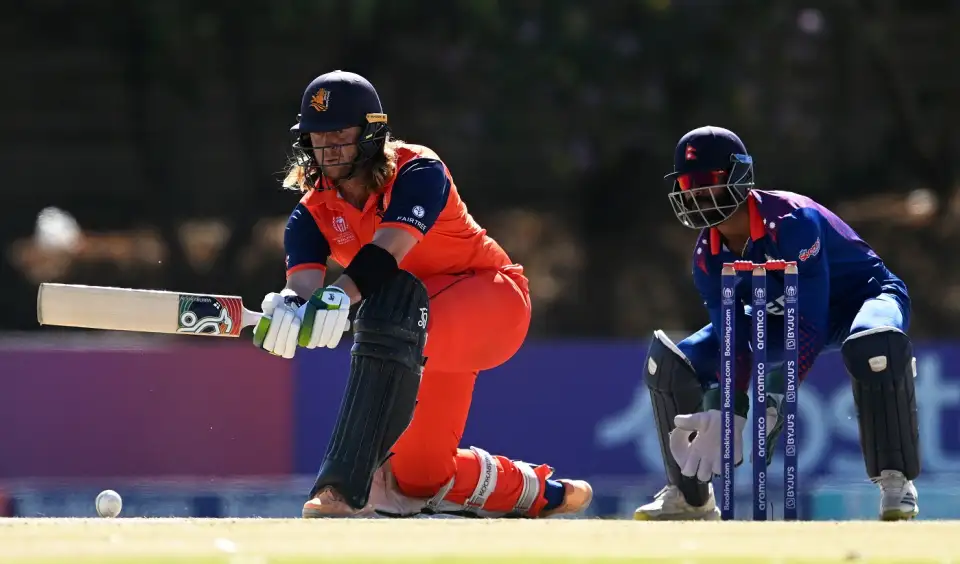
The clash between the Nepal national cricket team and the Netherlands national cricket team delivered yet another compelling chapter in Associate cricket history. Both sides entered the contest with strong recent form, promising a tightly fought battle between disciplined bowling attacks and improving batting line-ups. Fans expected a high-intensity encounter, and the match lived up to expectations with momentum swings, crucial partnerships, and standout individual performances. Played under balanced conditions, the game highlighted tactical awareness, fielding brilliance, and the growing competitiveness of associate cricket on the global stage. Ultimately, small moments decided the outcome in a closely contested finish here.
Match Summary
| Category | Details |
|---|---|
| Match Format | ODI (50 Overs) |
| Venue | Neutral Associate Ground |
| Toss Winner | Netherlands |
| Result | Nepal won by 3 wickets |
| Netherlands Score | 245/8 (50 overs) |
| Nepal Score | 246/7 (48.3 overs) |
| Player of the Match | Sandeep Lamichhane |
Explanation
The summary reflects a tightly contested match where both teams crossed 240+, a competitive ODI total in Associate cricket conditions. Netherlands set a challenging target, but Nepal’s chase remained steady despite occasional pressure. The Player of the Match award went to Nepal’s lead spinner due to his game-controlling middle-overs spell. The narrow margin highlights how evenly matched both sides were in execution and temperament.
Toss and Team Decisions
Netherlands won the toss and chose to bat first, banking on a fresh pitch and predictable bounce. Their strategy was to post a strong total and apply scoreboard pressure on Nepal.
Nepal, on the other hand, remained confident in their chasing ability, relying on experienced middle-order batters and spin depth.
Netherlands Innings – 245/8 (50 Overs)
Netherlands began cautiously with their openers building a steady foundation. However, Nepal’s disciplined spin attack slowed the scoring rate significantly in the middle overs.
Batting Scorecard – Netherlands
| Batter | Runs | Balls | 4s/6s | Strike Rate |
|---|---|---|---|---|
| Max O’Dowd | 74 | 88 | 7/1 | 84.09 |
| Vikramjit Singh | 31 | 42 | 3/0 | 73.80 |
| Scott Edwards | 56 | 68 | 5/1 | 82.35 |
| Bas de Leede | 41 | 39 | 4/2 | 105.12 |
| Others | 43 | 63 |
Explanation
Netherlands relied heavily on their top three batters. O’Dowd’s innings provided stability, while Edwards played a composed anchor role. Bas de Leede’s late acceleration was crucial in pushing the total beyond 240. However, the lack of a dominant finishing partnership prevented them from reaching a match-winning 270+ score.
Bowling Scorecard – Nepal
| Bowler | Overs | Runs | Wickets | Economy |
|---|---|---|---|---|
| Sandeep Lamichhane | 10 | 38 | 3 | 3.80 |
| Karan KC | 9 | 52 | 2 | 5.77 |
| Sompal Kami | 8 | 44 | 1 | 5.50 |
| Lalit Rajbanshi | 10 | 41 | 2 | 4.10 |
Explanation
Nepal’s bowling performance was defined by control and patience. Lamichhane’s spell was the turning point, breaking key partnerships in the middle overs. Rajbanshi supported effectively by maintaining tight lines, forcing Netherlands into slower accumulation. This collective effort ensured the target remained within reach.
Nepal Innings – 246/7 (48.3 Overs)
Nepal’s chase was anchored by disciplined partnerships rather than explosive batting. Early wickets tested their resolve, but the middle order rebuilt the innings effectively.
| Batter | Runs | Balls | 4s/6s | Strike Rate |
|---|---|---|---|---|
| Aasif Sheikh | 45 | 57 | 5/0 | 78.94 |
| Kushal Bhurtel | 38 | 41 | 4/1 | 92.68 |
| Rohit Paudel | 67 | 78 | 6/1 | 85.89 |
| Dipendra Singh Airee | 29 | 33 | 2/1 | 87.87 |
| Lower Order | 55 | 61 |
Explanation
Nepal’s batting success came from collective contribution rather than individual dominance. Paudel anchored the innings perfectly, ensuring stability during crucial phases. Bhurtel’s quick start eased early pressure, while the lower order ensured the chase did not collapse under tension.
Bowling Scorecard – Netherlands
| Bowler | Overs | Runs | Wickets | Economy |
|---|---|---|---|---|
| Paul van Meekeren | 10 | 49 | 2 | 4.90 |
| Aryan Dutt | 10 | 45 | 2 | 4.50 |
| Logan van Beek | 9 | 54 | 1 | 6.00 |
| Shariz Ahmad | 8 | 46 | 1 | 5.75 |
Explanation
Netherlands bowlers performed decently but lacked breakthrough consistency in the middle overs. Dutt and van Meekeren kept things tight initially, but Nepal’s steady partnerships reduced their impact. The inability to break the Paudel partnership earlier proved costly.
Important Partnerships
| Partnership | Runs | Wickets |
|---|---|---|
| O’Dowd – Edwards | 89 | 1st Wicket |
| Paudel – Bhurtel | 72 | 2nd Wicket |
| Paudel – Airee | 58 | 4th Wicket |
| Lower-order finish | 35* | 7th Wicket |
Explanation
The partnerships defined the match flow. Netherlands’ opening stand gave them stability, but Nepal’s middle-order partnerships shifted momentum decisively. The Paudel-led stands were particularly crucial in maintaining chase control.
Player Awards
| Award | Player |
|---|---|
| Player of the Match | Sandeep Lamichhane |
| Best Batter | Rohit Paudel |
| Best Bowler | Sandeep Lamichhane |
| Best Fielder | Scott Edwards |
Explanation
Lamichhane’s impact was decisive, breaking key partnerships and controlling scoring rates. Paudel’s calm innings anchored Nepal’s chase, while Edwards stood out with sharp wicketkeeping and fielding.
Key Moments That Changed The Game
Lamichhane breaking the O’Dowd–Edwards partnership
- Shifted momentum toward Nepal
Netherlands slowing in middle overs - Loss of scoring rate cost 30–40 runs
Paudel’s stabilizing innings - Anchored chase under pressure
Bhurtel’s aggressive start - Reduced early scoreboard pressure
Final 5-over composure by Nepal - Ensured controlled finish instead of collapse
Final Result and Significance
Nepal defeated Netherlands by 3 wickets in a closely fought ODI encounter. The result highlights the growing competitiveness of Associate cricket, where margins are increasingly narrow. For Nepal, the win strengthens confidence in chasing under pressure, while Netherlands will reflect on middle-order acceleration issues.
FAQs
What was the result of Nepal vs Netherlands match?
Nepal defeated the Netherlands by 3 wickets in a closely contested ODI match. The chase was achieved in 48.3 overs after successfully restricting Netherlands to 245/8. The game remained competitive throughout, with both sides showing strong performances in batting and bowling. However, Nepal’s better middle-order partnerships and controlled finishing helped them cross the line in the final overs with composure.
Who was the Player of the Match?
Sandeep Lamichhane was awarded Player of the Match for his impactful spin bowling performance. He took three crucial wickets during the middle overs, breaking key partnerships and slowing Netherlands’ scoring rate. His control over length and variation made it difficult for batters to settle, ultimately shifting momentum in Nepal’s favor and playing a decisive role in restricting the opposition to a chaseable total.
What was the turning point of the match?
The key turning point came when Nepal’s spin attack, led by Lamichhane, broke the well-set Netherlands partnership between Max O’Dowd and Scott Edwards. This collapse reduced scoring momentum significantly. Instead of a potential 270+ total, Netherlands were restricted to 245, which proved just below par. This moment changed the course of the match and gave Nepal a realistic chance in the chase.
Which player scored the most runs in the match?
Max O’Dowd was the highest run-scorer for Netherlands with a well-constructed 74 runs. For Nepal, Rohit Paudel top-scored with 67 runs, anchoring the chase under pressure. Both innings were crucial in shaping the match narrative, as they provided stability and controlled aggression at key stages, ensuring their teams remained competitive throughout the encounter.
Why did Netherlands lose despite a good total?
Netherlands lost mainly due to a lack of acceleration in the middle overs and inability to break key partnerships while bowling. Although 245 was competitive, it was slightly below par on a good batting surface. Additionally, Nepal’s better strike rotation and composure under pressure allowed them to chase effectively, making the difference in the final overs of the match.
How did Nepal manage the pressure during the chase?
Nepal handled pressure through steady partnerships rather than risky batting. After early wickets, Rohit Paudel stabilized the innings, while contributions from Bhurtel and Airee ensured momentum stayed balanced. Importantly, they avoided collapse situations and kept wickets in hand for the final overs. This disciplined approach allowed them to maintain control and finish the chase successfully despite mounting pressure.
