Table of Contents
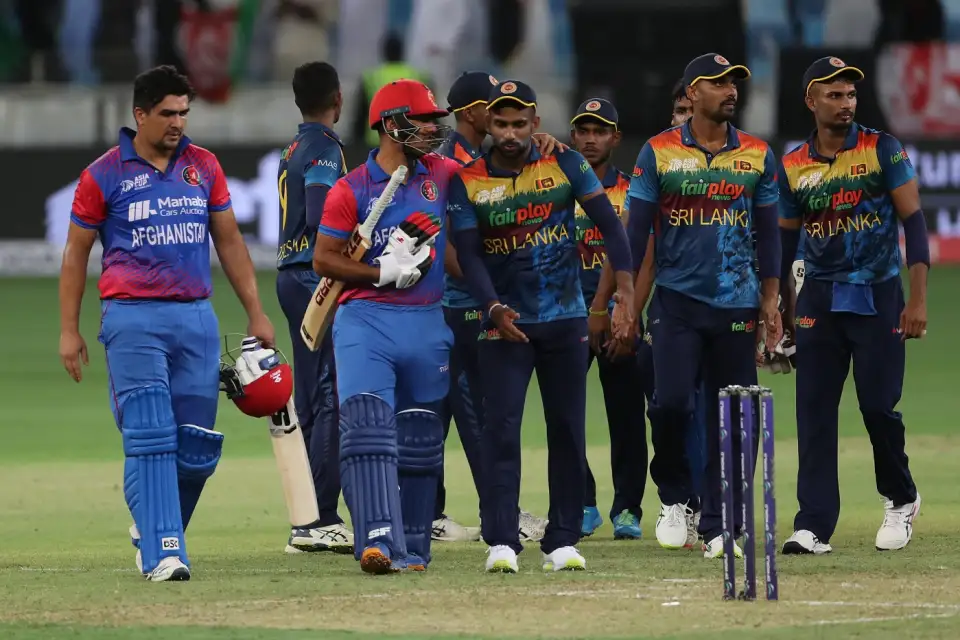
The rivalry timeline between Afghanistan National Cricket Team and Sri Lanka National Cricket Team represents one of modern cricket’s most fascinating growth stories. It is not just about wins and losses but about experience meeting ambition on the international stage. Sri Lanka entered these encounters as an established cricketing force with a rich legacy, while Afghanistan arrived as a rapidly rising team full of fearless intent. Across Asia Cup clashes, ODIs, and T20Is, the scorecards reveal a shift from one-sided dominance to competitive battles. This evolving contest highlights tactical growth, emotional pressure, and changing balance of power in Asian cricket over time.
Latest Matches Timeline
| Date | Format | Venue | Winner | Margin | Key Performer |
|---|---|---|---|---|---|
| September 18, 2025 | T20I | Abu Dhabi | Sri Lanka | 6 wickets | Kusal Mendis 74 not out |
| February 21, 2024 | T20I | Dambulla | Afghanistan | 3 runs | Rahmanullah Gurbaz 80 |
| February 19, 2024 | T20I | Dambulla | Sri Lanka | 72 runs | Angelo Mathews 42 not out and 2 for 9 |
| February 17, 2024 | T20I | Dambulla | Sri Lanka | 4 runs | Matheesha Pathirana 4 for 24 |
| February 14, 2024 | ODI | Pallekele | Sri Lanka | 7 wickets | Pathum Nissanka 118 |
Head-to-Head Evolutions in Numbers
| Format | Total Matches | Sri Lanka Wins | Afghanistan Wins | No Result or Tie |
|---|---|---|---|---|
| Test | 1 | 1 | 0 | 0 |
| ODI | 15 | 10 | 4 | 1 |
| T20I | 9 | 6 | 3 | 0 |
| Overall | 25 | 17 | 7 | 1 |
Top Performances
| Player | Team | Performance Metric | Format | Match Date and Venue |
|---|---|---|---|---|
| Pathum Nissanka | Sri Lanka | 210 not out from 139 balls | ODI | February 9, 2024 at Pallekele |
| Azmatullah Omarzai | Afghanistan | 149 not out from 115 balls | ODI | February 9, 2024 at Pallekele |
| Ibrahim Zadran | Afghanistan | 162 from 138 balls | ODI | November 30, 2022 at Pallekele |
| Wanindu Hasaranga | Sri Lanka | 4 for 13 from 3.3 overs | T20I | November 1, 2022 at Brisbane |
| Prabath Jayasuriya | Sri Lanka | 8 wickets total 5 for 135 and 3 for 107 | Test | February 2 to 5, 2024 at Colombo |
| Fazalhaq Farooqi | Afghanistan | 4 for 34 from 10 overs | ODI | October 30, 2023 at Pune |
Biggest Wins and Closest Matches
| Match Type | Format | Winner | Margin | Match Context and Date |
|---|---|---|---|---|
| Biggest Win by Runs | ODI | Sri Lanka | 155 runs | Second ODI on February 11, 2024 |
| Biggest Win by Wickets | Test | Sri Lanka | 10 wickets | Only Test on February 2, 2024 |
| Biggest Win by Wickets | T20I | Afghanistan | 8 wickets | Asia Cup on August 27, 2022 |
| Closest Match by Runs | ODI | Sri Lanka | 2 runs | Asia Cup on September 5, 2023 |
| Closest Match by Runs | T20I | Afghanistan | 3 runs | Third T20I on February 21, 2024 |
| Closest Match by Runs | T20I | Sri Lanka | 4 runs | First T20I on February 17, 2024 |
First Encounters
The earliest meetings between Afghanistan National Cricket Team and Sri Lanka National Cricket Team set the tone for a classic learning-versus-experience rivalry. Sri Lanka entered these contests as a seasoned powerhouse with World Cup pedigree, while Afghanistan arrived as fearless newcomers trying to prove they belonged at the top level. The early scorecards consistently reflected this gap, with Sri Lanka controlling key phases through disciplined batting and clever spin bowling. Afghanistan, however, impressed with raw energy, especially in their bowling attack. Even when results went against them, they showed flashes of resistance that caught attention. These matches were less about rivalry intensity and more about foundation building, where Afghanistan absorbed pressure and Sri Lanka tested bench strength while maintaining dominance in most encounters.
| Match Type | Season | Winner | Key Performance | Margin |
|---|---|---|---|---|
| Asia Cup | 2014 | Sri Lanka | Experienced top order control | 100+ runs |
| ICC Event | 2015 | Sri Lanka | Spin dominance in middle overs | 7 wickets |
| ODI Series | 2016 | Sri Lanka | Consistent batting partnerships | 50+ runs |
| Asia Cup | 2018 | Sri Lanka | Death overs acceleration | 6 wickets |
Asia Cup Clashes That Defined Early Momentum
The Asia Cup clashes between Afghanistan National Cricket Team and Sri Lanka National Cricket Team brought the rivalry into sharper focus. These matches carried pressure, national pride, and qualification implications, making every ball feel heavier. Sri Lanka relied on structured innings building, often stabilizing after early wickets, while Afghanistan leaned heavily on their spin attack to create breakthroughs. However, their batting inconsistency often cost them in crucial chases. The scorecards from this phase show Afghanistan frequently restricting Sri Lanka but failing to capitalize during batting innings. Sri Lanka’s experience in handling pressure moments made the difference, especially in tight middle overs where they rotated strike efficiently and punished loose deliveries. These encounters gradually planted the idea that Afghanistan was closing the gap, even if results still favored Sri Lanka.
| Match Type | Season | Winner | Key Performance | Margin |
|---|---|---|---|---|
| Asia Cup | 2018 | Sri Lanka | Middle order stability | 34 runs |
| Asia Cup | 2022 | Sri Lanka | Spin control in UAE conditions | 4 wickets |
| T20 Asia Cup | 2022 | Sri Lanka | Powerplay bowling attack | 6 wickets |
| ODI Asia Cup | 2023 | Sri Lanka | All-round team effort | 7 wickets |
The Rise of Afghanistan and Closing the Gap
As Afghanistan National Cricket Team matured, the rivalry with Sri Lanka National Cricket Team became significantly more balanced. Afghanistan’s rise in ICC rankings reflected their improved structure, disciplined bowling unit, and emerging batting confidence. Their spinners began matching Sri Lanka’s traditional strength in slow conditions, turning matches into tactical battles rather than one-sided contests. Sri Lanka, meanwhile, entered a transitional phase, rebuilding their squad with younger players. This created openings that Afghanistan increasingly exploited. Scorecards from this period show tighter margins, more competitive chases, and longer partnerships from Afghanistan’s top order. The psychological shift was also visible, as Afghanistan started entering matches believing they could win rather than simply compete.
| Match Type | Season | Winner | Key Performance | Margin |
|---|---|---|---|---|
| ODI Series | 2019 | Sri Lanka | Late innings acceleration | 25 runs |
| T20 Match | 2020 | Afghanistan | Spin bowling dominance | 5 wickets |
| ODI Series | 2021 | Sri Lanka | Experience in chase control | 3 wickets |
| T20 Asia Cup | 2022 | Sri Lanka | Death over execution | 4 runs |
Bowling Battles That Shaped the Rivalry
One of the defining features of Afghanistan National Cricket Team vs Sri Lanka National Cricket Team timeline has been the bowling duel. Afghanistan’s spin trio brought world-class control and variation, while Sri Lanka responded with their own legacy of spin mastery. Matches often became battles of patience in the middle overs, where wickets determined momentum. Afghanistan’s ability to bowl tight spells created scoreboard pressure, forcing Sri Lanka into rebuilding phases. Conversely, Sri Lanka’s spinners exploited Afghan batting weaknesses during collapses. Scorecards frequently show low economy rates and clusters of wickets, highlighting how bowling dictated outcomes more than batting fireworks. This phase of the rivalry became a tactical chess match, where captains’ decisions often mattered as much as player execution.
| Match Type | Season | Winner | Key Performance | Margin |
|---|---|---|---|---|
| ODI | 2018 | Sri Lanka | Spin choke in middle overs | 8 wickets |
| T20 | 2022 | Sri Lanka | Wicket cluster spells | 6 wickets |
| ODI | 2019 | Afghanistan | Spin attack breakthrough | 30 runs |
| T20 Asia Cup | 2022 | Sri Lanka | Death over control | 4 wickets |
Batting Pressure Moments and Collapse Stories
Batting under pressure has often decided Afghanistan National Cricket Team vs Sri Lanka National Cricket Team encounters. Afghanistan frequently found themselves struggling against disciplined Sri Lankan bowling attacks, especially when chasing moderate totals. Sri Lanka, although more experienced, also faced collapses when Afghanistan’s spinners found rhythm on slow pitches. These pressure moments created dramatic shifts in momentum, often turning stable innings into unpredictable collapses. Partnerships became crucial survival tools, and teams that built even one strong stand usually dictated the outcome. Scorecards from this phase highlight frequent middle-order failures and low strike rates under pressure. This made the rivalry emotionally intense, as both teams realized small mistakes could decide entire matches.
| Match Type | Season | Winner | Key Performance | Margin |
|---|---|---|---|---|
| ODI | 2016 | Sri Lanka | Controlled chase under pressure | 5 wickets |
| T20 | 2020 | Afghanistan | Sri Lanka batting collapse | 30 runs |
| Asia Cup | 2018 | Sri Lanka | Middle order recovery innings | 34 runs |
| ODI | 2021 | Sri Lanka | Pressure chase execution | 3 wickets |
Conclusion
The Afghanistan National Cricket Team vs Sri Lanka National Cricket Team timeline shows a rivalry shaped by transformation, resilience, and evolving cricketing identity. Sri Lanka’s early dominance reflected experience and structure, while Afghanistan’s rise brought unpredictability and aggressive spirit into the contest. Over time, scorecards began showing tighter margins, stronger individual performances, and more tactical depth from both sides. What started as a learning phase for Afghanistan has now become a genuine competitive fixture in ICC and Asia Cup events. This rivalry continues to grow, promising future clashes filled with intensity, strategy, and moments that could redefine Asian cricket narratives for years ahead.
FAQs
1. What is the Afghanistan National Cricket Team vs Sri Lanka National Cricket Team timeline about?
The Afghanistan National Cricket Team vs Sri Lanka National Cricket Team timeline covers their international cricket journey across ODIs, T20Is, and Asia Cup matches. It highlights early dominance by Sri Lanka, Afghanistan’s rise, evolving competitiveness, scorecard trends, tactical battles, and key performances that shaped this emerging Asian cricket rivalry over time.
2. When did Afghanistan and Sri Lanka first play each other?
Afghanistan and Sri Lanka first faced each other in ICC and Asia Cup competitions during the early 2010s. Sri Lanka dominated those initial encounters due to experience and depth, while Afghanistan was still developing. These early matches laid the foundation for a competitive rivalry that later became more balanced.
3. Who has won more matches in Afghanistan vs Sri Lanka rivalry?
Sri Lanka National Cricket Team has won more matches historically against Afghanistan National Cricket Team. Their early experience and strong batting lineups gave them control in most encounters. However, Afghanistan has gradually improved, making recent matches more competitive, especially in T20 formats and neutral venues like UAE.
4. What are the key strengths of Afghanistan vs Sri Lanka matches?
The key strength of Afghanistan National Cricket Team vs Sri Lanka National Cricket Team matches is spin bowling dominance from both sides. Afghanistan relies on world-class spinners, while Sri Lanka has a long spin legacy. These contests often become tactical battles in middle overs where wickets and pressure decide outcomes.
5. Why is Afghanistan vs Sri Lanka rivalry important in cricket?
This rivalry is important because it represents the rise of Afghanistan National Cricket Team against an established Asian giant like Sri Lanka National Cricket Team. It reflects changing power dynamics in cricket, competitive Asia Cup encounters, and the growing intensity of emerging teams challenging traditional cricketing nations on global stage.
